- Penny For Your Thoughts
- Posts
- "Just Missed It": How Nike’s D2C Dream Became a Retail Nightmare?
"Just Missed It": How Nike’s D2C Dream Became a Retail Nightmare?

Penny for your Thoughts
August 03, 2025
Nike is feeling the heat, no longer dominating the running market. Its sales are dropping, dead inventory is piling up, and the stock price has tumbled by a worrying 21%. What was once an invincible brand is now looking like a stock market disaster in the United States of America. The root cause of this downfall? A bold but flawed decision—Nike’s shift from its successful wholesale model to a "Direct-to-Consumer" (D2C) strategy.
Back in 2011, instead of selling through wholesalers, Nike transformed its business model with a three-pillar framework that integrates digital and physical shopping. The first pillar involved a suite of apps like Nike Training Club and Nike Run Club, which collected data on customer preferences and habits. Using this rich data, Nike crafted its second pillar: a specialized retail portfolio including Nike Rise for localized experiences, Nike House of Innovation for cutting-edge product launches, and Nike Style, catering to Gen Z’s love for streetwear. The third pillar ties it all together—Nike uses app data to optimize store locations, inventory, and product recommendations, while using QR codes for product info and app checkouts to enhance the personalized shopping experience. This strategy cut off one-third of their wholesale partners, and even ended its high-profile partnership with Amazon.
Nike had the perfect recipe for retail domination: a solid brand value, an insane amount of data, millions of customers using the app, and billions of dollars to make it all happen across America. So, did they succeed? Initially, yes as their D2C sales exploded from 16% of total revenue in 2011 to 35% in 2020. When Adidas’s total revenue in 2022 was $24 billion, Nike generated $18.7 billion just through the D2C channel that year. Everything seemed great, right?
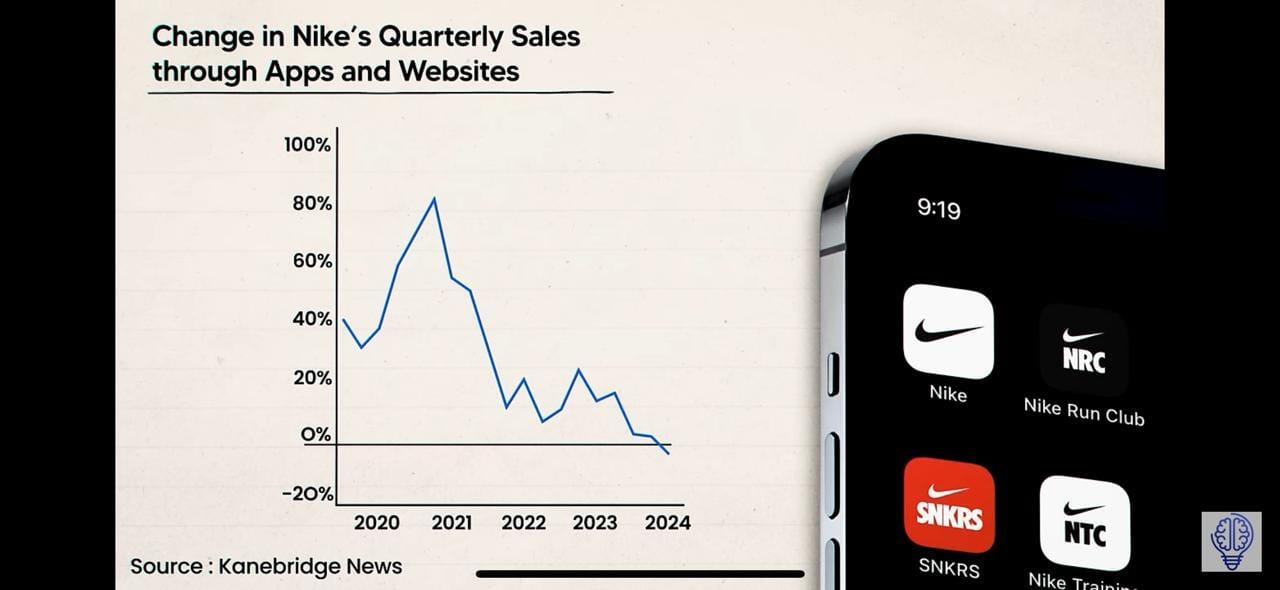
Well, the story took a sharp turn post COVID, exposing cracks in the D2C dream. As the world reopened, it turned out people still liked buying shoes in stores. However, Nike wasn’t in as many stores anymore.
This is where the dark side of the D2C channel emerges, familiar to D2C brands across India as well. The first blow came from recession, when consumers tend to compare multiple shoe options and choose the most economical option, rather than blindly picking Nike. Next, with no wholesalers to blame for their ballooned stock, Nike's inventory bloated to a massive $9.7 billion by 2022, impacting profitability due to storage costs. Handling logistics on their own was no walk in the park either—it was as enjoyable as being stuck in Mumbai traffic on a rainy day. Plus, their flagship stores became cash guzzlers—high rents, low returns.
To make matters worse, as Nike tried to make a comeback to wholesalers, other brands like On and Hoka had already hijacked their spot utilizing the gap in the market.
This offers important lessons for investors and entrepreneurs about the complexities and risks of the D2C approach.
1) The D2C strategy isn't the perfect "do-it-all-yourself" plan it was thought to be. Middlemen aren’t just leeching off profits; they spread risk and increase reach; and they’re not going away anytime soon.
2) While brands like to believe their customers are loyal, more often than not, they’re not. They're just one tempting offer away from jumping ship. Nike learned this the hard way.